DUNMORELUXURY ELDER CARE REIMAGINEDLet’s Talk
OUR STORY

I spent six years
caring for my parents.
I wish more of that time
had been spent being their son.

I moved closer thinking I would hire a couple to help Mom and Dad as they aged. Six years later, I had become the administrator of a private elder-care operation with one client: my father. This is the experience that became Dunmore.

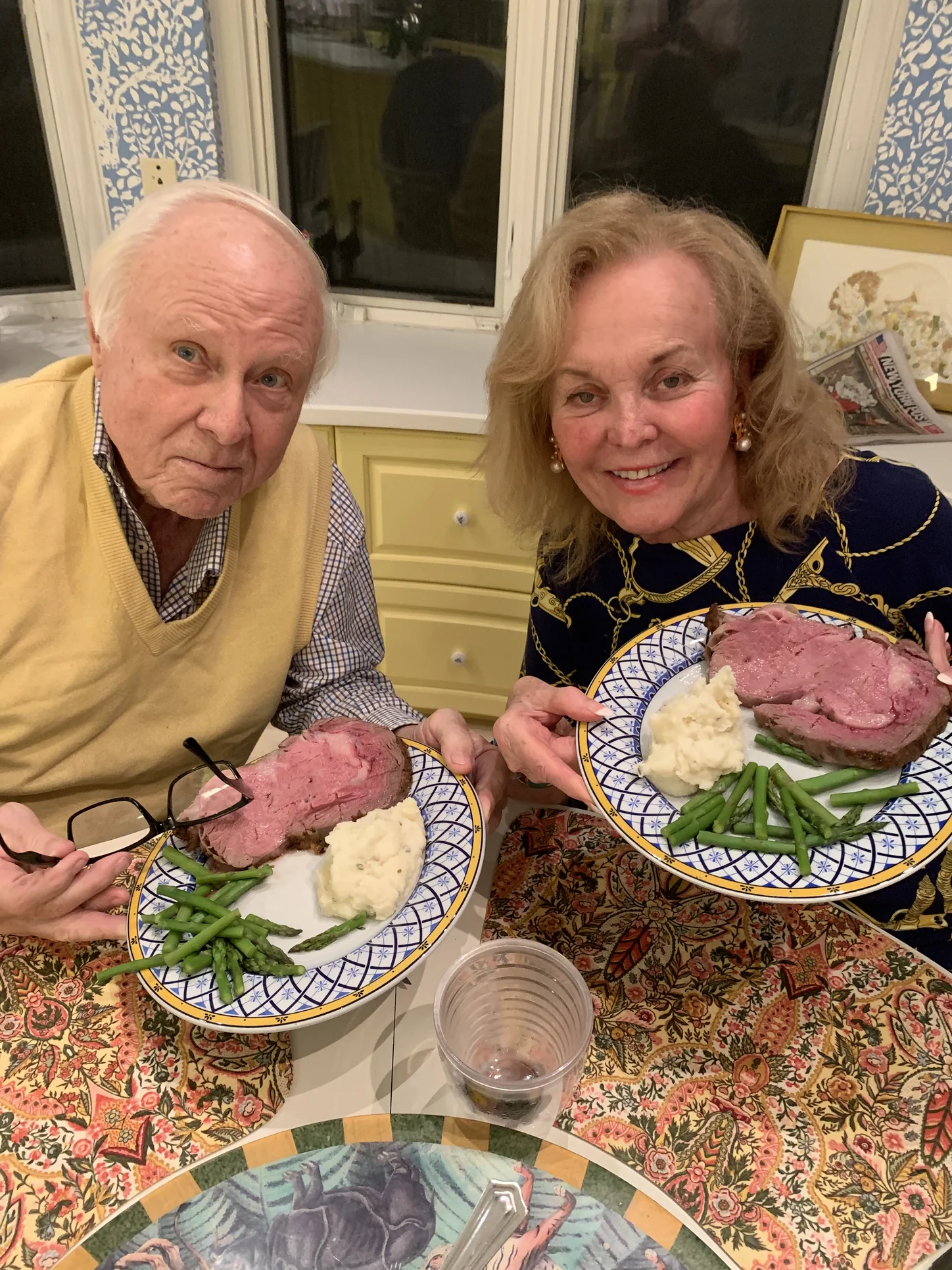
Alex’s mother and father together at a dining table
Alex’s mother and father
MOM, DAD AND ME

“Dunmore is what I wish had existed for my parents.”

I wish it had existed for Mom. I wish it had existed years earlier for Dad. And I wish I could have spent more of those years enjoying them, instead of managing their care.

— Alex Shogren, Founder

THE ORIGINAL DUNMORE

The luxury isn’t the building.
The luxury is being known.

My family vacationed at the Dunmore Beach Club on Harbour Island in the Bahamas for as long as I can remember. My father later became an owner, alongside a business partner.

After I sold my first company, I bought out his partner. Dad and I had the opportunity to own and operate the Dunmore together. Watching him taught me what personal hospitality could be.

He knew his guests and remembered them. After they returned home, he would handwrite them a personal note and mail it to them. Every guest mattered enough for him to take the time.

Dad taught me to pay attention to the individual. Years later, caring for my parents showed me how much that same attention matters in elder care. The Dunmore name is an homage to him and to that lesson.

ALEX SHOGREN · FOUNDER, DUNMORE

I Would Have Traded Proximity
for Exceptional Care.

Why my mother’s experience defines the standard we strive to deliver for every Dunmore family.

When my mother first entered a memory care facility in the United States costing more than $10,000 a month, it was an extraordinarily traumatic time for our family.

Mom had Alzheimer’s. Eventually, even with private caregivers, we could no longer care for her safely at home. Moving her into memory care was one of the most traumatic decisions our family ever made.

We were paying for what we believed would be exceptional care. Cost wasn’t my primary concern. I wanted my mother to be comfortable, safe, treated with dignity and surrounded by people who genuinely cared about her.

During her first week, I witnessed five incidents that I will never forget.

On one occasion, I discovered feces on what were supposed to be her clean bed linens. On another, I found feces on her couch. Three other times, I found Mom walking around after having soiled herself, apparently without anyone noticing or helping her.

Meanwhile, I observed three caregivers sitting in separate corners of the common areas, legs crossed, looking at their phones while residents wandered aimlessly around the facility.

I was appalled.

I reported what I witnessed and made such an issue of the situation that part of the facility’s management team was replaced during that first week.

I tried desperately to force that facility to provide the level of care my mother deserved.

But eventually, they wore me down.

I found myself accepting mediocre care for my mother, something I never would have imagined tolerating when we first placed her there.

I even began to internalize the things I was being told—that Mom didn’t really know what day it was, or whether I had visited her.

Looking back, that troubles me enormously.

Because whether Mom remembered my visit was never the point. She was still my mother. She still deserved to feel safe, comfortable, loved and cared for.

We continued employing one of Mom’s former caregivers to visit the facility multiple times a day, at random times, simply to make sure she was being looked after properly.

We were paying a luxury memory care facility, and then paying someone else to make sure the facility was actually caring for my mother.

And here’s something I wish I had understood much earlier.

I would have gladly traded proximity for exceptional care.

I would have accepted having my mother farther away if I knew she was receiving genuinely extraordinary attention every day.

I would have paid more. I would have traveled farther. I would have done whatever was necessary.

The problem wasn’t that I was unwilling to spend the money.

The problem was that even spending enormous amounts of money didn’t guarantee the care she deserved.

The economics of conventional American elder care make truly individualized, one-to-one attention extraordinarily expensive and difficult to sustain.

And that’s what makes Dunmore different.

In the Dominican Republic, we can build a model around one dedicated caregiver for each acute assisted-living or memory-care resident during waking hours, with most frontline caregivers being nurses. Each home has a Team Lead, families have their own Family Lead, and physicians, therapists and other professionals support the entire care experience.

Dr. Janna routinely sits down with someone’s loved one and helps them with a puzzle. She spends quality time with residents during her visits. Her care goes beyond clinical observations: she gets to know the person, shares their day and gives them her time without rushing in and out of a room.

The cost of recreating that level of personal, daily physician attention in the United States would be beyond reason. At Dunmore, it is part of what we mean by exceptional care.

We can build accountability into the operation, including appropriate camera monitoring, because families should never have to wonder whether someone is paying attention.

And we can do all of this in beautiful, intimate residences, with an extraordinary quality of life, at a cost that would be extremely difficult to reproduce in the United States.

At Dunmore, mediocre care is not acceptable.

We strive for perfection.

Not perfection in the sense that every day will be flawless, or that aging and illness can somehow be made easy.

But perfection in the things we can control: attention, compassion, dignity, responsiveness, cleanliness, medical oversight and the genuine human connection between a caregiver and the person entrusted to their care.

We will never stop asking ourselves how we can do better.

I wish Dunmore had existed when my mother was alive.

I can’t change what happened to her.

But I can make sure her experience helps define the standard we strive to deliver for every Dunmore family.

Alex ShogrenFounder, Dunmore
DAD AND ME

The Six Years
That Changed Everything.

When I first moved to Florida to be closer to my parents, I thought I had a fairly simple plan.

Mom and Dad were getting older. I figured I'd find a good couple to help around the house, manage their needs as they aged, and make sure they were comfortable.

I certainly never imagined that I would spend the next six years essentially putting my own life on hold to care for them.

Or that the experience would eventually take Dad and me to the Dominican Republic and become the foundation for Dunmore.

A Speedster, and Something to Look Forward To

Meanwhile, Dad was doing pretty well.

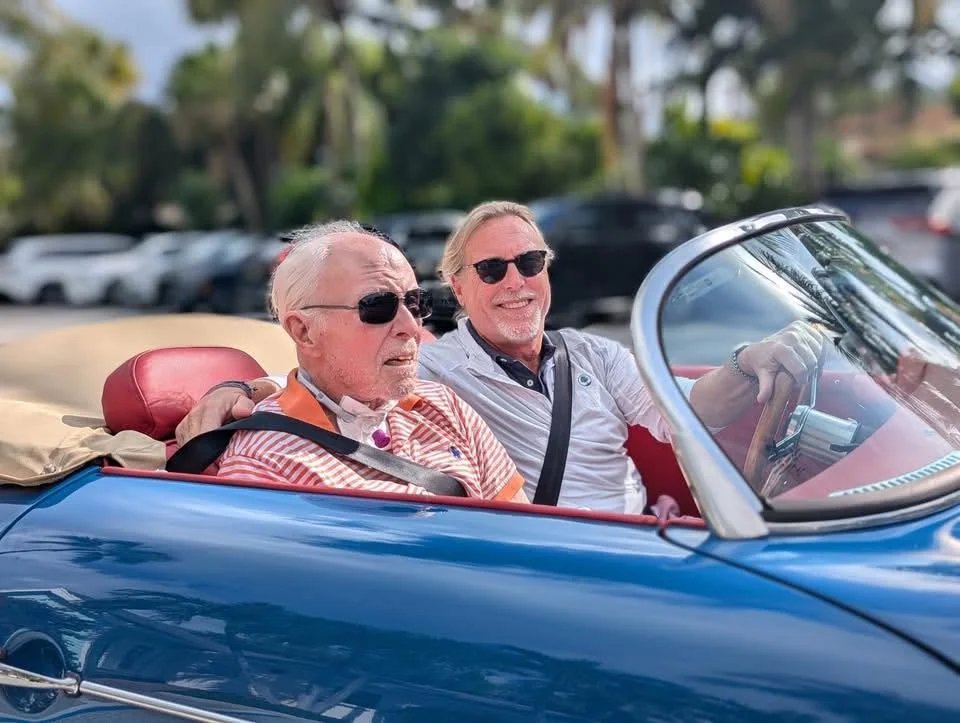
He and I had just bought an old Porsche Speedster together, and we were excited about it. It was something fun for us to share, something to look forward to.

Then Dad started complaining about dizziness.

He had an orthostatic blood pressure problem, and one day he fell and hit his head.

Everything changed.

One Fall Changed Both Our Lives

Dad suffered a traumatic brain injury. He spent a couple of weeks in the hospital and experienced seizures.

When he came home, he needed around-the-clock care.

He could still get around somewhat with assistance, and we were doing everything possible to help him recover. Physical therapy, rehabilitation, medical appointments, specialists, medications—there seemed to be an endless number of people and services to coordinate.

And I was managing all of it.

I was hiring caregivers, interviewing candidates, managing schedules, coordinating therapists, dealing with care companies and trying to make sure everyone was doing what they were supposed to do.

What I hadn't understood before this experience is that hiring and managing caregivers can become a full-time job in itself.

Finding someone with the right qualifications is only the beginning.

They also have to be dependable, attentive, patient and compassionate.

And most importantly, they have to get along with the person they're caring for.

Dad had a strong personality. He knew what he liked, and he certainly knew what he didn't like.

Over the years, we went through caregiver after caregiver.

Some were perfectly capable on paper, but Dad simply didn't enjoy having them around. In fact, many of them annoyed him.

And who could blame him?

Imagine losing much of your independence, needing someone around you every hour of the day, and then having to spend those hours with someone whose company you don't particularly enjoy.

A caregiver isn't simply someone who performs tasks. They're someone who becomes part of your life.

It took me almost four years to assemble a team in the United States that met both Dad's standards and mine.

Four years.

And throughout that time, I was essentially the administrator of a private elder-care operation with one client: my father.

As Dad's World Became Smaller, Mine Did Too

After a second fall and a second traumatic brain injury, Dad's condition deteriorated further.

Eventually, he needed two full-time caregivers.

I continued managing everything, trying to make his life as comfortable, meaningful and enjoyable as possible.

But something else was happening that was just as heartbreaking as his physical decline.

Dad was losing his social world.

Several of his friends passed away around the same time. Others gradually stopped visiting as frequently.

I watched a man who had always been extraordinarily social, charismatic and full of life become increasingly isolated.

This was the same man who had loved running the Dunmore Beach Club in the Bahamas, who knew everyone, who made every guest feel special, and who personally wrote thank-you notes after their visits.

Now his world was becoming smaller and smaller.

And so was mine.

I had stopped living much of my own life.

I wasn't simply Dad's son anymore. I was his recruiter, scheduler, human resources department, medical coordinator, household manager and problem solver.

I loved my father, and I would do it all again for him.

But I wish I could have spent more of those years simply being his son.

Instead, so much of our time together was consumed by managing his care.

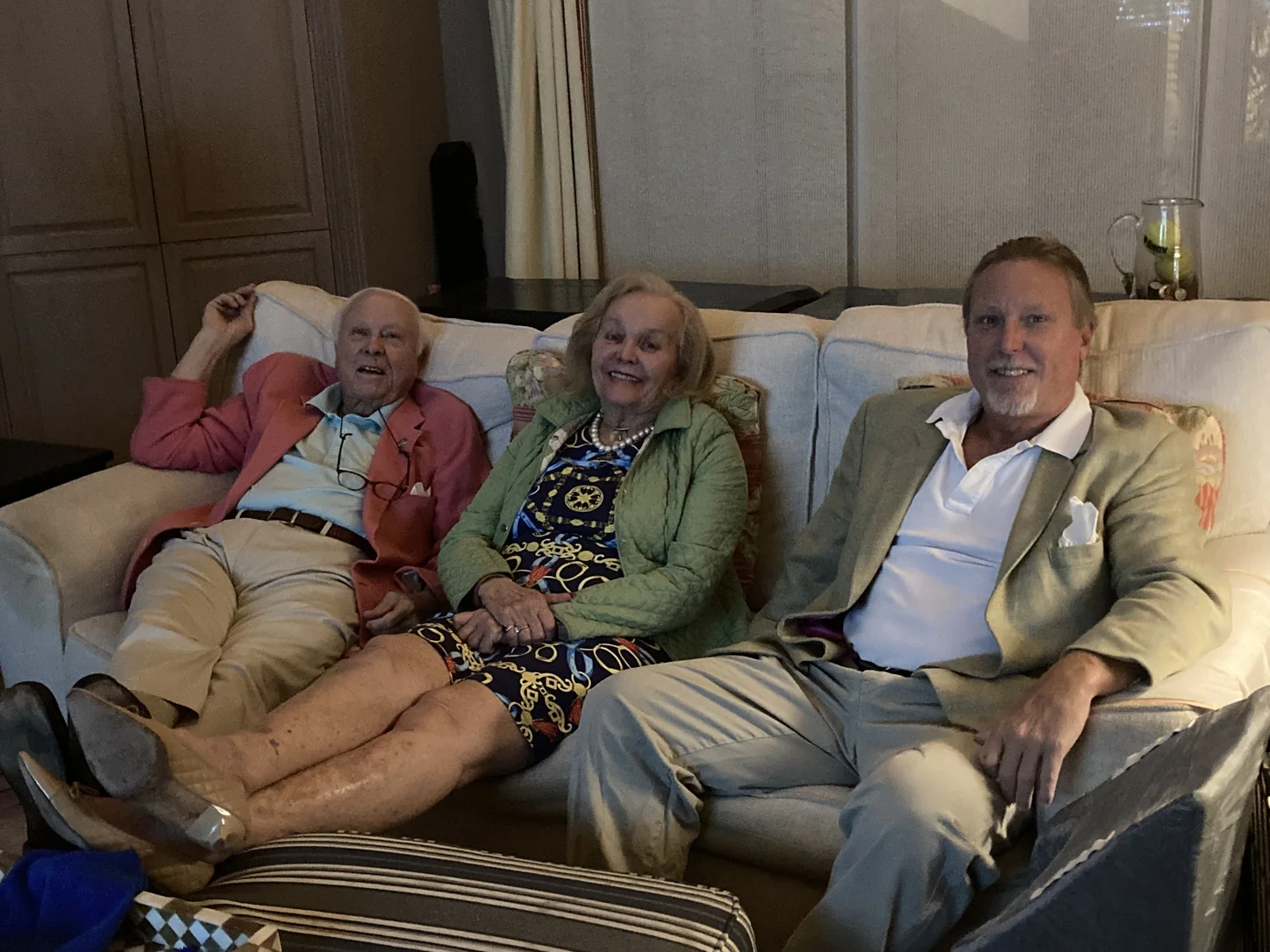
Alex Shogren sitting with his mother and father
Alex Shogren and his parents

They were still Mom and Dad.

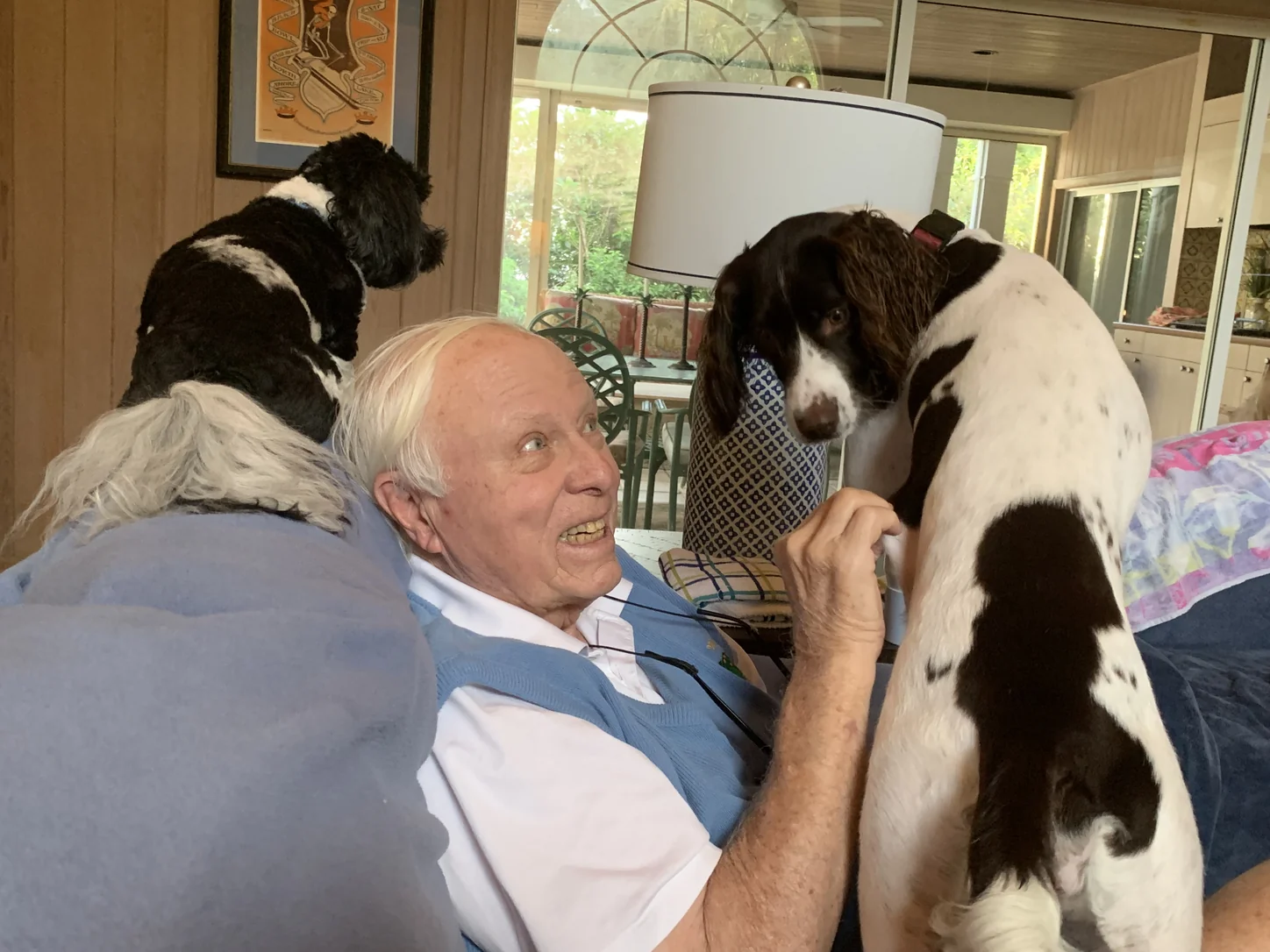
My parents’ relationships, pets, habits and preferences mattered alongside their care needs. As Dad’s independence and social world grew smaller, keeping those parts of life mattered more than ever.

Alex’s father sitting with dogs beside him
Alex’s father with dogs
MY FATHER · DR. JANNA · THE HEART OF DUNMORE

Then I Met
Dr. Janna.

The Vacation That Changed Everything

In February 2026, a friend and I decided to take a short vacation to the Dominican Republic.

It was my first vacation in six years.

For six years, my life had revolved around caring for my parents. First Mom, as Alzheimer’s gradually took more and more of her independence, and then Dad, following traumatic brain injuries that left him needing around-the-clock care.

I loved my parents, and I would do it all again. But the emotional, physical, and financial demands of caregiving had taken an enormous toll on me. I was suffering from severe caregiver burnout.

That short vacation changed everything.

I began to see the North Coast’s extraordinary potential—not just as a vacation destination, but as a place where people could enjoy a remarkable quality of life and receive personalized care at a cost that would be difficult to reproduce in the United States.

I began thinking that the North Coast could someday become the new Florida.

But the most important discovery of that trip wasn’t the beaches, the climate, or the economics.

It was Dr. Janna.

I was so impressed by her knowledge, compassion, and approach to caring for older adults that less than six weeks later, I moved Dad to the Dominican Republic.

It was one of the best decisions I ever made.

Looking back, meeting her was probably the best thing that happened to us during that entire experience.

Within two days of Dad’s arrival, Dr. Janna recognized something his doctors in the United States had never identified. She recognized a Parkinsonian condition related to his traumatic brain injury.

Dad was finally prescribed the medication he needed. The difference in his comfort and quality of life during his remaining months was extraordinary. He was more peaceful, more comfortable, and we were able to enjoy moments together that I will treasure for the rest of my life.

But that wasn’t what made Dr. Janna so special.

It was how much she cared about him.

I’ve met a lot of doctors over the years. I’ve dealt with some of the best medical institutions in the United States. But I have never encountered a physician with more genuine compassion and empathy than Dr. Janna.

When she walked into the room, Dad’s face would light up.

During the last month of his life, he would actually blow her kisses when she came to see him.

I can hardly describe what that meant to me. Even now, thinking about it brings tears to my eyes.

Here was my father, a man who had suffered so much, whose life had been transformed by a terrible injury, finding happiness simply because his doctor had walked into the room.

That’s what extraordinary care looks like.

It isn’t just medical expertise, although Dr. Janna has that in abundance. It isn’t simply having a doctor available or someone managing prescriptions.

It’s having a physician who knows you. Who notices the small things. Who genuinely cares whether you’re comfortable, whether you’re frightened, whether you’re having a good day.

Someone who treats you as a person rather than a patient.

She Cared for Me, Too.

But there’s another part of this story that’s just as important.

Dr. Janna didn’t just care for Dad. She cared for me.

After six years of caregiving, I was exhausted. I had spent so long worrying about my parents, managing caregivers, coordinating doctors, and handling one crisis after another that I had almost forgotten what it felt like to have someone looking after me.

Dr. Janna recognized that.

She understood that the person caring for an aging parent sometimes needs just as much compassion and support as the parent themselves.

She gave Dad a better quality of life during his final months, and she gave me something I desperately needed: peace of mind, relief, and the opportunity to begin reclaiming my own life.

To me, she’s an angel.

And the experience made me realize that what we had created for Dad shouldn’t be available only to families fortunate enough to assemble it themselves.

It should be something other families could experience, too.

That’s why I’m building Dunmore.

Not simply to provide better elder care at a lower cost, but to care for the entire family.

Because I’ve learned that when you truly take care of Mom or Dad, you can change the life of their son or daughter, too.

Before they were patients, they were Mom and Dad.

And that is why Dr. Janna is so central to Dunmore today.

As our Medical Director & Founding Angel, Dr. Janna is our founding and primary physician. She personally knows every resident and maintains an ongoing relationship with each resident and family. She leads a team of at least two additional physicians, providing daily oversight across our three homes, a physician present on Sundays and continuity when she is unavailable or at another residence. Our residential care includes at least two nurses on duty in each residence at all times, in addition to dedicated caregivers.

We’re not building a care company and then looking for doctors to support it.

We’re building Dunmore around the kind of care Dr. Janna gave my father.

Because after everything I went through with both of my parents, I learned that the greatest luxury isn’t an oceanfront home, beautiful furnishings or even a dedicated caregiver.

It’s knowing that the people caring for someone you love genuinely love what they do—and genuinely care about the person they’re doing it for.

Dad taught me that lesson through hospitality at the Dunmore Beach Club.

Dr. Janna showed me what it looks like in medicine.

And together, those two experiences became the heart of Dunmore.

Meet Dr. Janna: her background and approach to care

Alex ShogrenFounder, Dunmore

Alex Shogren and his father sharing a ride in an open-top car
Alex Shogren and his father
THE COMPANY I NEVER INTENDED TO BUILD

I lived the problem.
With Dad, I found a better way.

Looking back, I realize that I spent six years learning nearly everything I never wanted to know about elder care.

I learned what happens when an expensive memory care facility fails to provide basic attention.

I learned how difficult it is to find caregivers who are not only qualified, but who genuinely connect with the people they're caring for.

I learned how much work goes into coordinating physicians, therapists, medications, schedules, household services and the countless details that make up a person's daily life.

I learned how emotionally exhausting it can be for a son or daughter to become responsible for everything.

And I learned that spending more money doesn't necessarily produce better care.

But most importantly, I learned that there was another way.

In the Dominican Republic, we could surround Dad with extraordinary personal attention, compassionate medical professionals and a beautiful environment that made his remaining time more comfortable and meaningful.

And we could do it with fundamentally different economics.

I had essentially built a one-client concierge elder-care company for my father.

Dunmore is the professionally organized version of what I wish someone else had built for us.

A place where Mom or Dad has a dedicated caregiver during waking hours, supported by Team Leads, Family Leads, physicians, therapists and a complete care team.

A place where the majority of our frontline caregivers are nurses.

A place where the family doesn't have to spend years interviewing caregivers, managing schedules and fighting to get the care they've already paid for.

A place where someone is paying attention.

And a place where sons and daughters can go back to being sons and daughters.

I originally moved to Florida thinking I'd hire a couple of people to help my parents as they aged.

Six years later, I found myself in the Caribbean, having discovered an entirely different way to care for the people we love.

I wish Dunmore had existed for Mom.

I wish Dunmore had existed years earlier for Dad.

And I wish I'd been able to spend more of those six years enjoying my parents instead of managing their care.

That's why I'm building Dunmore.

Not because I studied an industry and discovered an attractive business opportunity.

Because I lived the problem. And with Dad, I finally discovered a better way.

ABOUT ALEX

Building businesses long before Dunmore.

I founded HedgeFund.net and later Best Kiteboarding. Decades of building and operating businesses have meant hiring people, building organizations and solving the practical problems that come with running them.

I bring that experience to Dunmore. The reason for building it comes from my parents: families need care they can trust and people who help carry the responsibility.

Care should make more life possible. At home or in a Dunmore residence, personalized care, healthcare coordination and practical help should support the life around it.

Explore residential care
The Dunmore villa with its shared terrace and garden
A Dunmore residence on the North Coast
THE DUNMORE VISION

Care that evolves with life.

We begin with three intimate luxury homes and 14–16 residential rooms: our premier six-room oceanfront residence and two non-oceanfront homes. Each offers the same standard of dedicated caregiving, round-the-clock nursing and daily oversight from the physician team led by Dr. Janna. Our ambition is to help make the North Coast the new Florida, expanding as families choose Dunmore.

The longer-term vision includes caregiver training, adult daycare, medical and community centers, and Dunmore-owned residential communities. Dunmore Ocean and Dunmore Mountain would offer different settings and price points through a future membership model, with a private hospital as a later possibility. The goal is continuity as people’s needs change.

The thinking behind memory care

You can be their family again.

Tell us what life looks like today. We will work through the care, the people and the practical details with you.

Let’s Talk